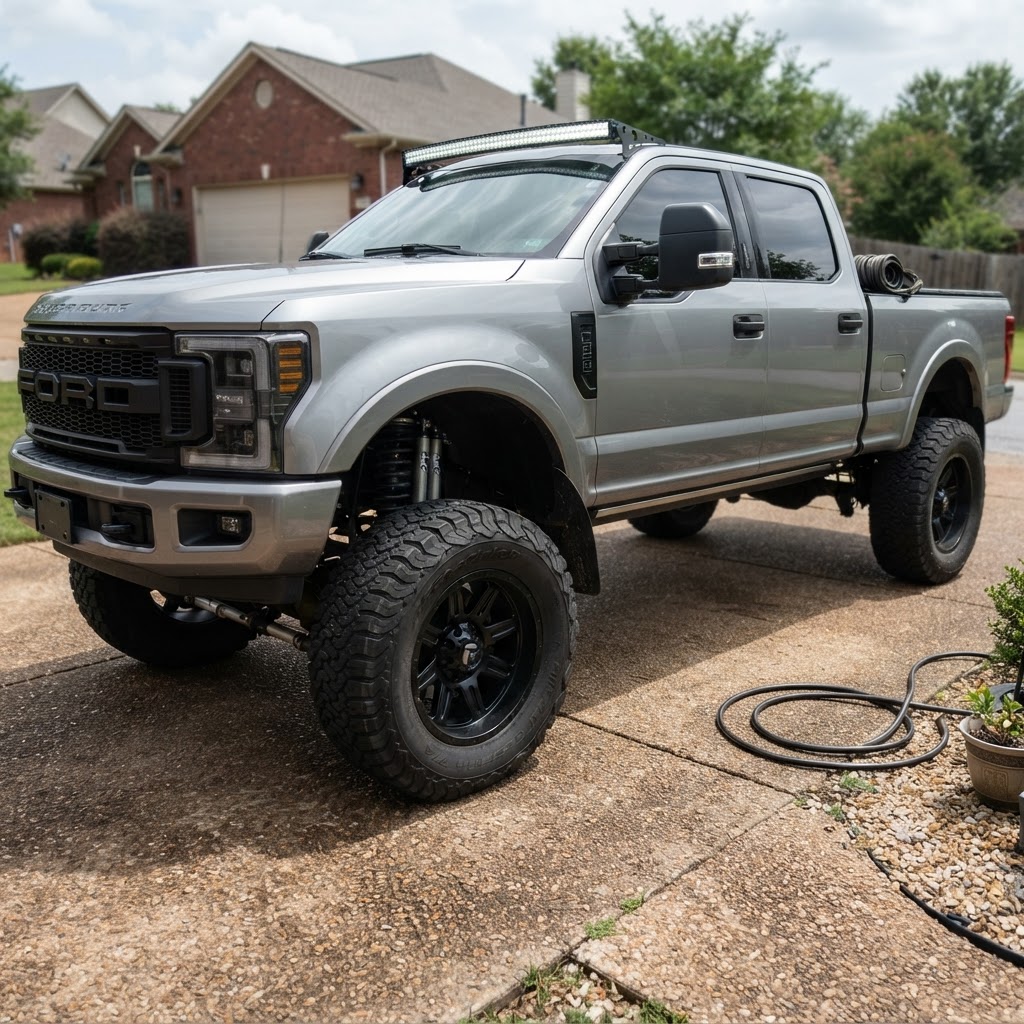
Truck Wheel Fitment Guide: Size, Offset, Load Rating & Tire Compatibility
The best wheel for your truck is not a brand or spoke design. It is a wheel that fits the hub, clears the brakes, supports the load and works with a tire size appropriate for the vehicle.
Start with the factory tire label
NHTSA recommends using the original tire size or another size recommended by the vehicle manufacturer.
Check:
- Driver-door Tire and Loading Information label
- Owner's manual
- Factory wheel size
- Tire load index
- Recommended inflation pressure
Changing wheel diameter does not change the truck's GVWR, payload or axle ratings.
Bolt pattern
The wheel must match the truck's bolt pattern exactly.
Do not rely on "looks like six-lug." Six-lug trucks can use different bolt circles.
Hub bore
Some wheels are hub-centric and locate tightly on the hub. Others rely more on the lug hardware.
Use the correct hub-centric rings when the wheel manufacturer specifies them.
Offset
Offset controls where the wheel sits relative to the hub.
Changing offset can affect:
- Fender clearance
- Upper-control-arm clearance
- Scrub radius
- Steering feel
- Wheel-bearing load
- Tire rub at full lock
A wheel that physically bolts on can still have poor offset for the truck.
Width
Wheel width must be compatible with the tire.
A tire maker publishes an approved wheel-width range for each tire size.
Too narrow or too wide a wheel can change tire shape and performance.
Load rating
This is critical on trucks.
The wheel should have enough load capacity for the axle loads the truck can carry.
Do not assume an off-road-looking wheel is rated for a heavy-duty pickup.
Check the manufacturer's stated load rating for the exact size and bolt pattern.
Bigger wheels and low-profile tires
Larger wheels often require shorter tire sidewalls to keep overall diameter close to stock.
Tradeoffs can include:
- Harsher ride
- Less sidewall protection
- More expensive tires
- Greater wheel-damage risk
- Different unsprung weight
Smaller wheels
A smaller wheel with more tire sidewall can improve ride and off-road durability, but it must clear the brake package.
Some trims use larger brakes than others.
Tire diameter
A larger overall tire diameter can affect:
- Speedometer accuracy
- Effective gearing
- Acceleration
- Braking feel
- Clearance
- Spare-tire fit
- ABS and traction-control behavior
Some vehicles can be recalibrated for approved size changes.
TPMS
Modern light trucks use tire-pressure monitoring systems.
Confirm whether the new wheels accept the correct sensors and whether relearn or programming is required.
Installation
Use the correct:
- Lug-seat type
- Lug nuts
- Torque specification
- Hub rings if required
Recheck torque after installation according to the wheel or vehicle manufacturer's instructions.
Bottom line
Buy truck wheels by fitment first and appearance second.
Match bolt pattern, hub bore, offset, width, brake clearance and load rating, then choose a tire size that the vehicle and tire manufacturers support.