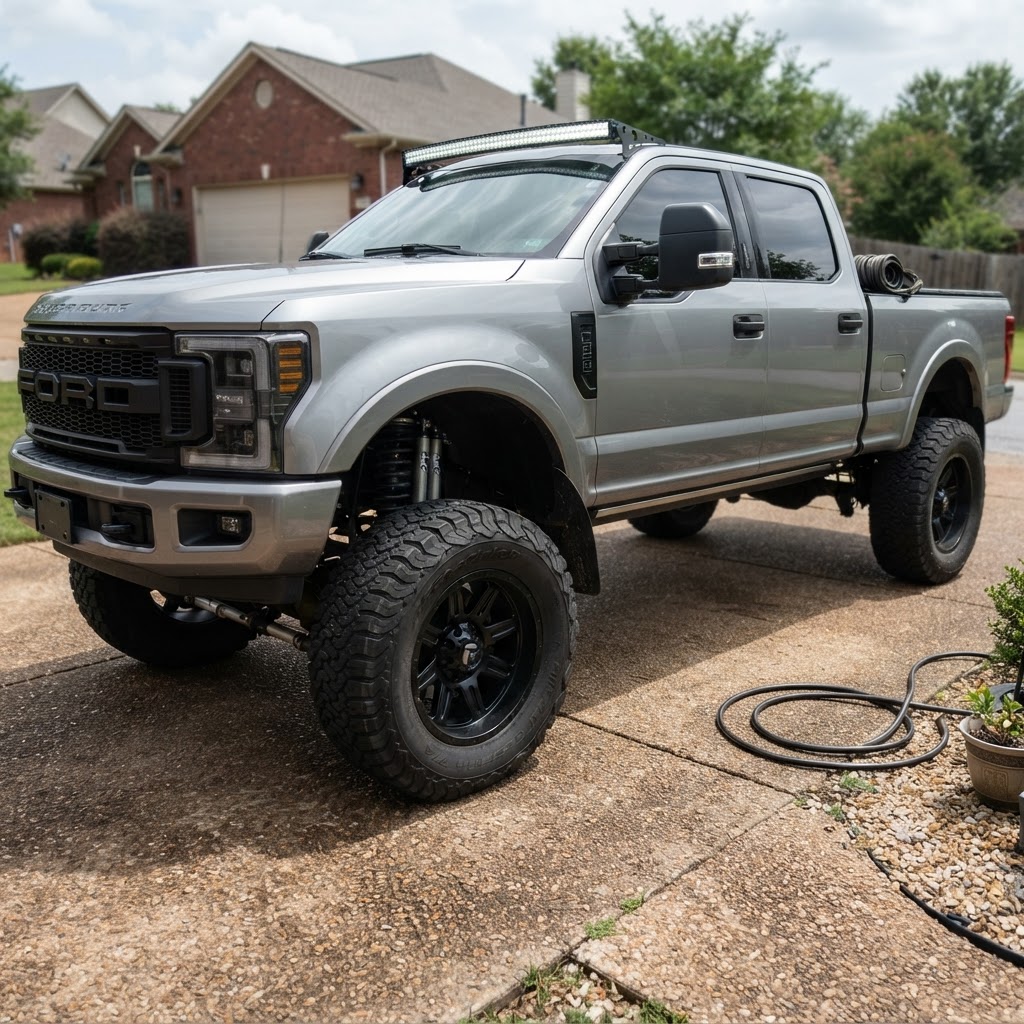
Chevy Silverado Off-Road Tire Guide: Size, Load Range & Terrain
The right off-road tire for a Chevy Silverado depends on the exact truck, how much pavement it sees and what kind of terrain you actually drive.
A tire that works well on a daily-driven Silverado 1500 may be a poor fit for a heavily loaded work truck or a Silverado HD.
Start with the factory tire label
NHTSA recommends using the original tire size or another size recommended by the vehicle manufacturer.
Check the driver-door Tire and Loading Information label for:
- Factory tire size
- Recommended cold pressure
- Seating capacity
- Combined passenger and cargo limit
Do not use the maximum pressure molded into the tire sidewall as the truck's normal inflation target unless the vehicle manufacturer specifies it.
Identify the truck first
Before shopping, confirm:
- Silverado 1500, 2500 HD or 3500 HD
- Model year
- 2WD or 4WD
- Trim
- Wheel diameter
- Factory suspension or lift
- Current tire size
- Payload and towing use
Chevrolet offers off-road-oriented Silverado configurations such as Trail Boss and ZR2, but factory suspension and tire fitment still vary by trim.
All-terrain tires
All-terrain tires are usually the most balanced option for trucks that spend substantial time on pavement.
They can work well for:
- Gravel roads
- Forest roads
- Light mud
- Dirt
- Snow depending on tire rating
- Daily highway use
Compared with aggressive mud-terrain tires, they generally prioritize road manners and tread life.
Mud-terrain tires
Mud-terrain tires use larger tread voids and more aggressive patterns.
They can provide an advantage in:
- Deep mud
- Loose dirt
- Rocky terrain
- Low-speed trail use
Tradeoffs can include:
- More road noise
- Heavier tire weight
- Faster or uneven wear on pavement
- Reduced fuel economy
- Different wet-road behavior
Load rating matters
A tire must support the truck's actual axle loads.
For a work truck or towing setup, do not choose a tire based only on tread appearance.
Check:
- Load index
- Load range where applicable
- Maximum load at pressure
- Wheel load rating
- Vehicle axle ratings
The tire should meet or exceed the requirements for the specific truck and use.
Tire diameter changes more than appearance
Larger tires can affect:
- Effective gearing
- Acceleration
- Braking feel
- Speedometer accuracy
- Clearance
- Steering
- Fuel economy
- Spare-tire fit
- Suspension travel
A larger tire can rub even when it clears while parked.
Check full steering lock and suspension compression.
Wheel width
The wheel must fall within the tire manufacturer's approved rim-width range.
A tire may technically fit the truck but still be wrong for the wheel width.
Offset and backspacing
Changing wheel offset can move the tire inward or outward.
That affects:
- Upper control arm clearance
- Fender clearance
- Steering geometry
- Wheel-bearing loading
- Tire rub
Do not solve one clearance problem by creating another.
Daily driving vs trail priority
If the Silverado is mostly a commuter with occasional dirt-road use, an all-terrain tire is usually the logical starting point.
If the truck routinely sees mud, rocks or technical trails, a more aggressive tire may be justified.
The more specialized the tire becomes for off-road use, the more carefully you should evaluate road noise, wet braking and tread life.
Towing and hauling
Towing adds heat and load to the tires.
Chevrolet recommends regular tire inspection and rotation as part of Silverado maintenance, especially for trucks used for work and towing.
Before a heavy trip, inspect:
- Tread condition
- Sidewall damage
- Pressure
- Uneven wear
- Age
- Spare tire
Airing down
Some drivers reduce tire pressure off road for traction and ride quality.
Only do this within the tire and vehicle manufacturer's safe operating guidance, and reinflate to the recommended on-road pressure before returning to normal road speeds.
Bottom line
The best Silverado off-road tire is the one that matches the truck's factory requirements and the terrain you actually drive.
Start with the door label, preserve adequate load capacity, verify wheel compatibility and choose the least-aggressive tire that reliably handles your real off-road use.