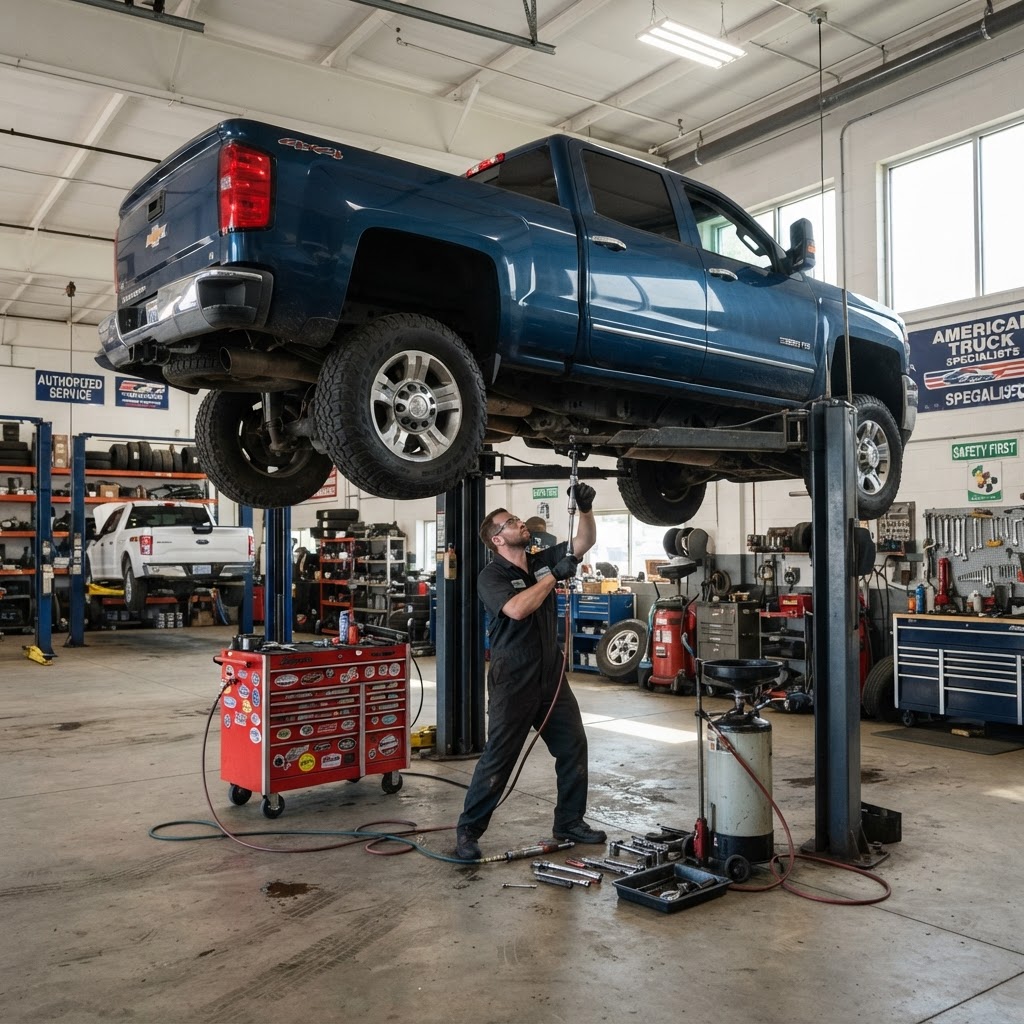

DIY Truck Maintenance Guide: What to Handle at Home vs a Repair Shop
Working on your own truck can save money and help you understand the vehicle better.
The key is choosing jobs that match your tools, experience and the manufacturer's service information instead of treating every repair as a weekend project.
Start with the factory information
Before buying parts, confirm the exact:
- Model year
- Engine
- Drivetrain
- Fluid specification
- Filter specification
- Maintenance interval
- Torque requirements
- Service procedure
Generic advice can be wrong for a specific truck.
Good beginner maintenance jobs
For many owners, reasonable starting points include:
- Wiper replacement
- Cabin-air-filter replacement
- Engine-air-filter replacement
- Tire-pressure checks
- Visual fluid checks
- Bulb replacement where accessible
- Battery-condition inspection
- Basic cleaning and corrosion inspection
These are useful maintenance tasks without requiring major disassembly.
Tire pressure
NHTSA recommends using the pressure listed by the vehicle manufacturer, typically shown on the Tire and Loading Information label.
Do not use the maximum pressure printed on the tire sidewall as a substitute for the truck manufacturer's recommended pressure.
Check pressure when tires are cold.
Oil changes
Oil changes are common DIY maintenance, but the exact oil grade, capacity and filter depend on the engine.
Use the owner's manual or factory service information.
Keep records of:
- Date
- Mileage
- Oil specification
- Filter part number
Those records are useful for maintenance planning and resale documentation.
Used oil
EPA guidance says used motor oil should be collected and recycled rather than dumped.
Store it in a suitable leak-resistant container and take it to an approved collection or recycling location.
Do not mix used oil with unrelated chemicals or fluids if the local recycling program requires it to remain separate.
Check for recalls
Before paying for a repair, check whether the truck has an open safety recall.
NHTSA allows vehicle owners to search by VIN or license plate.
If an unrepaired safety recall applies to the truck, the manufacturer remedy may be available through an authorized dealer.
Maintenance vs diagnosis
Routine maintenance and fault diagnosis are different jobs.
Replacing an air filter is straightforward.
Trying to diagnose:
- Intermittent electrical faults
- Transmission problems
- Steering issues
- Brake-system faults
- Complex warning lights
can require scan tools, service data and professional testing.
Do not replace parts simply because an internet forum says a symptom "usually" means one specific component.
When a repair shop makes sense
Use a qualified shop when the job involves systems where an error can create a serious safety or reliability problem.
Examples include:
- Brake hydraulic faults
- Steering repairs
- Major suspension repairs
- Fuel leaks
- Airbag systems
- High-voltage hybrid or electric systems
- Internal transmission work
- Complex electrical diagnosis
The goal of DIY maintenance is not to avoid a shop at all costs.
It is to handle appropriate work correctly.
Parts quality
For maintenance items, verify:
- Correct application
- Correct size
- Correct material
- Correct electrical connector where applicable
A cheaper part is not a savings if it does not match the truck.
Keep a maintenance log
Record:
- Service date
- Mileage
- Parts used
- Fluids used
- Receipts
- Symptoms noticed
- Upcoming maintenance
A simple maintenance log can prevent duplicate work and missed service intervals.
Inspect while you maintain
Routine maintenance is a good time to notice:
- Fluid leaks
- Tire damage
- Cracked belts
- Loose trim
- Corrosion
- Damaged wiring
- Unusual wear
Finding a problem early is often more valuable than performing an unnecessary repair.
Do not confuse maintenance with modification
Changing wheels, suspension, tuning or lighting is not the same as routine maintenance.
Modifications can affect:
- Fitment
- Alignment
- Tire clearance
- emissions compliance
- Warranty questions
- Vehicle safety systems
Research those separately before changing the truck.
Use recalls and manufacturer updates
NHTSA also provides information on recalls, investigations and manufacturer communications.
If a recurring issue appears on your truck, check official information before assuming the fix.
Bottom line
DIY truck maintenance works best when you stay within jobs you can verify and document.
Use factory information, check recalls, recycle used oil properly and let a qualified shop handle repairs that require specialized diagnosis or involve critical safety systems.